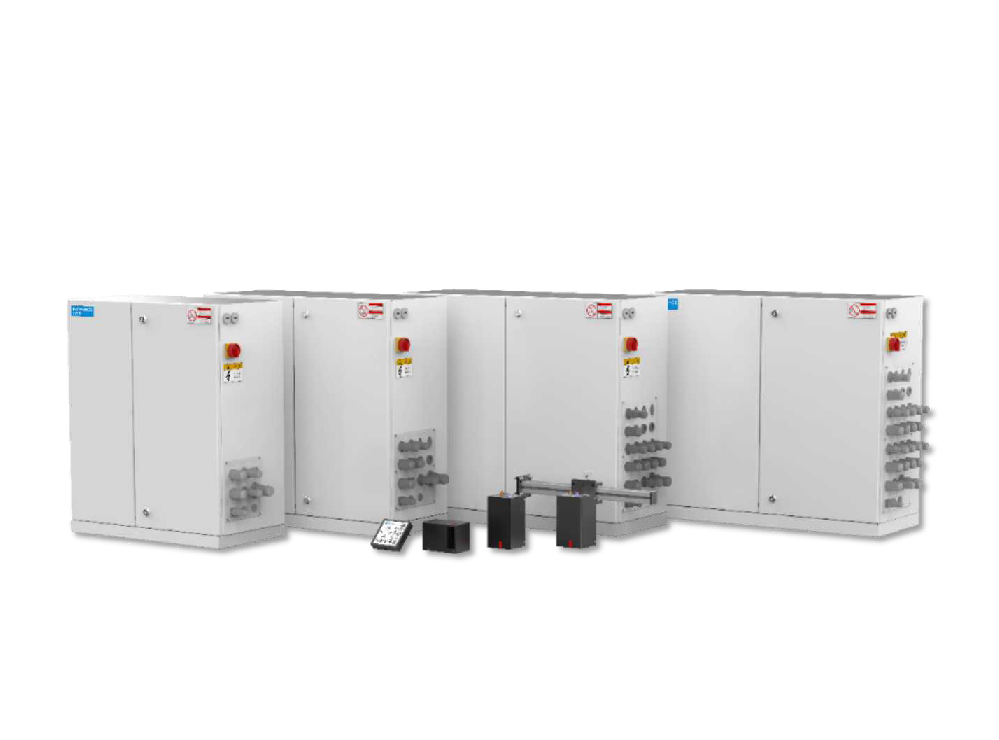
Key Advantages
Outstanding performance: register accuracy of ±0.05 mm, supporting maximum printing speed up to 400 m/min.
Compatible with printing substrates including coated paper, pearlescent film, translucent film, silver foil and holographic materials.
Fully automatic operation: self‑startup upon machine power‑on; automatic mark detection completes with only 3 printing plates.
Register adjustment finished within 2 color stations, delivering 100 % efficiency improvement versus manual operation.
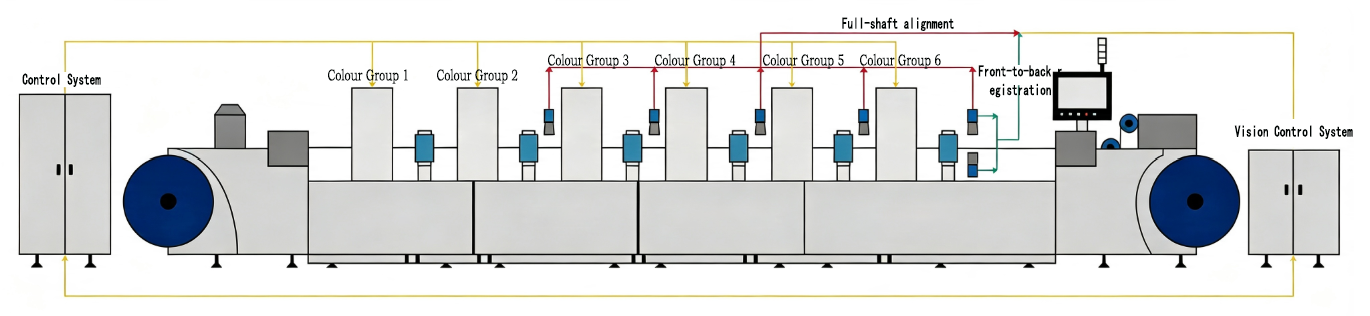 Double‑Sided Register Control
Cameras are mounted after the final color station. The first color is set as the reference. Camera triggering occurs once per printed plate length. After image acquisition, position offsets between each color station and the reference color are computed. Offset values together with compensation parameters are sent to the motion controller to drive motors for position correction.It is designed for simultaneous front‑and‑back printing applications such as publication and newspaper printing presses.
Full‑Shaft Register Control
A camera module is installed after every color station except the reference station. All color stations perform synchronous adjustments against the reference color during printing, which drastically improves tuning efficiency. Widely adopted for long‑frame printing presses, label printing and flexible‑packaging printing.
Register Correction Principle
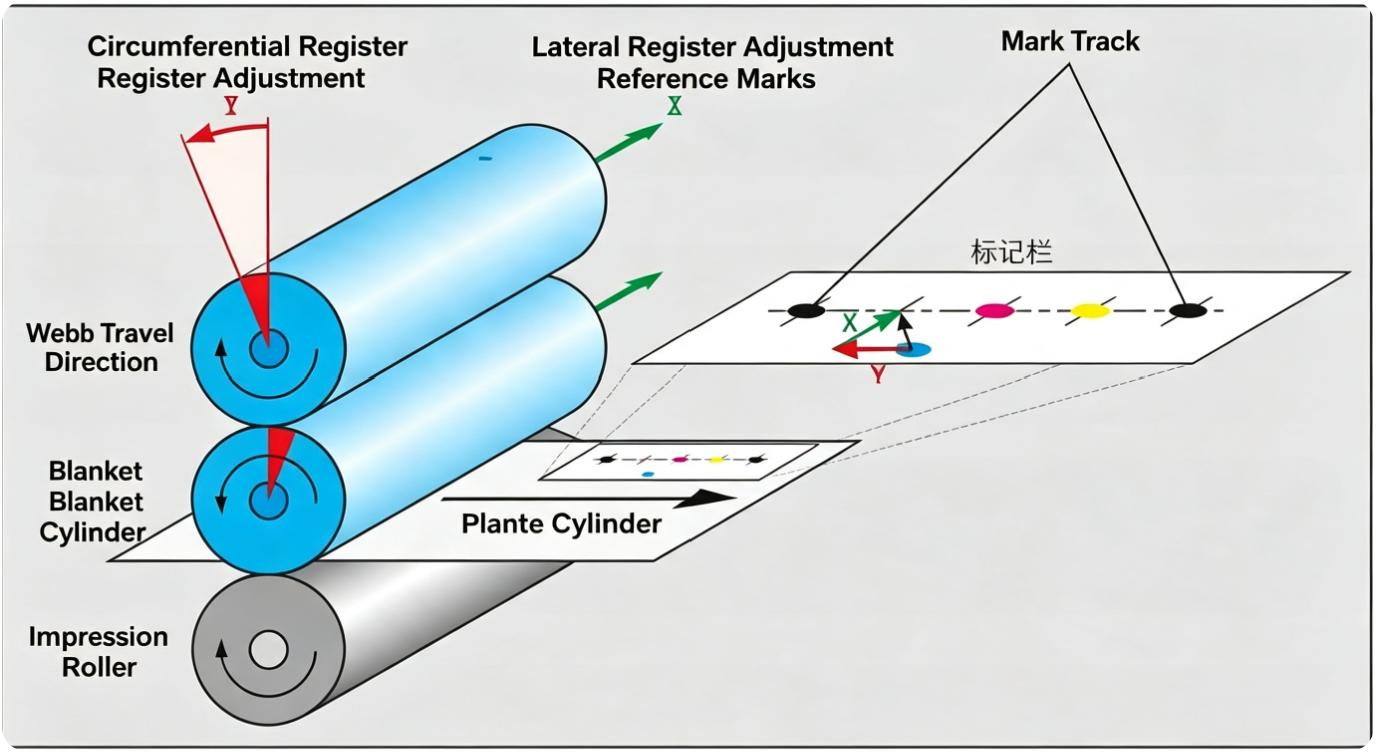
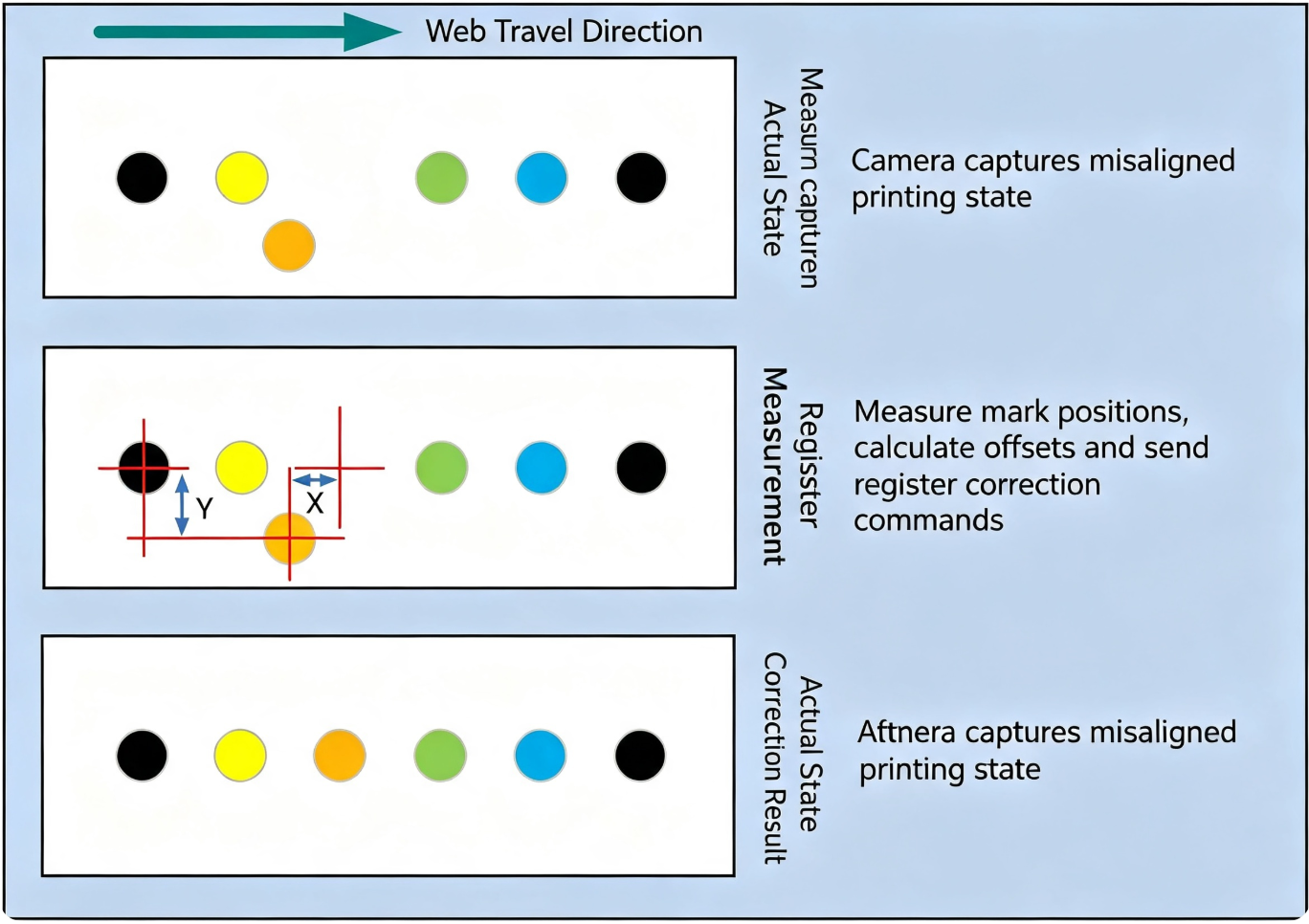
Each printing unit prints dedicated circular register marks. The first unit or black‑ink unit prints a pair of reference circular marks. The system measures XY offsets between circular marks from subsequent printing units and the reference marks.After the last printing unit, circular marks from all units are evenly arranged on the web to form a mark track. Camera units integrated with optical systems capture images of this mark track containing all circular register marks. Captured images are processed by specialized image‑processing algorithms.The system measures the position of each circular mark relative to the reference marks to determine register errors in lateral (X) and circumferential (Y) directions. Based on positional deviations from the reference unit, correction commands are generated for servo motors of corresponding printing units. These commands are transmitted to the press control system via TCP communication interface. The control system drives register motors to align circular marks to their nominal plate positions.
 ch
ch English