ch
ch English
Conventional 10.6μm CO₂ lasers tend to cause substrate puncture and scorching when processing PET/PI lithium battery films. The short-wavelength 9.3μm dedicated CO₂ laser delivers an extremely small heat-affected zone, enabling mark-free marking and precision cutting for continuous mass production of lithium battery insulation coils. Leading lithium battery material manufacturers are fully switching to this type of equipment, and wide-format dual-station machines stand out as the preferred purchasing option.
In power battery manufacturing, PET and PI insulation films together with lithium battery tapes serve as core isolation and insulation materials for cells. These thin, flexible materials impose strict requirements on laser processing. For years, the industry widely adopted standard 10.6μm CO₂ lasers for film machining. This wavelength shows low thermal absorption efficiency on plastic films and generates a broad heat-affected area, frequently triggering substrate breakdown, carbonized burnt edges and dimensional deviation. The resultant high defect rate fails to satisfy mass-production standards for high-end power batteries.
Advances in laser optics have enabled large-scale commercialization of 9.3μm short-wavelength dedicated CO₂ laser sources, fundamentally resolving bottlenecks in film processing from an optical perspective. PET and PI polymer materials absorb far more laser energy at the 9.3μm band compared with 10.6μm. Heat concentrates along the machining trace with minimal lateral thermal spread, confining the heat-affected zone to the micrometer level. After cutting and marking, film edges remain smooth and burr-free without substrate burn-through or delamination, greatly boosting finished product yield.
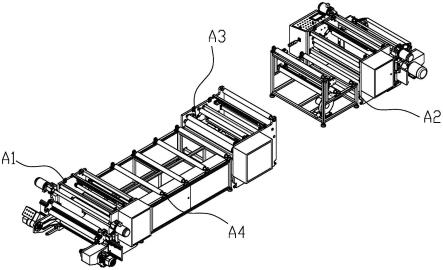
Applicable processes cover three mainstream procedures: inline QR code marking on lithium battery insulation tapes, special-shaped precision cutting of PI films, and micro-hole machining of separators. The equipment supports uninterrupted feeding of 50–200 mm wide coils. Equipped with a CCD automatic positioning system, it maintains stable machining accuracy within ±0.03 mm and meets full-process traceability requirements for power battery production.
Major domestic lithium battery material suppliers and battery PACK factories have phased out outdated 10.6μm laser systems and rolled out bulk replacements of coil-fed laser all-in-one machines fitted with 9.3μm laser sources. Thanks to productivity advantages, alternating dual-station models are the top choice for procurement. Industry surveys indicate that 9.3μm equipment accounts for over 82% of orders for lithium battery film laser machines in 2026, accompanied by continuous expansion of market scale.